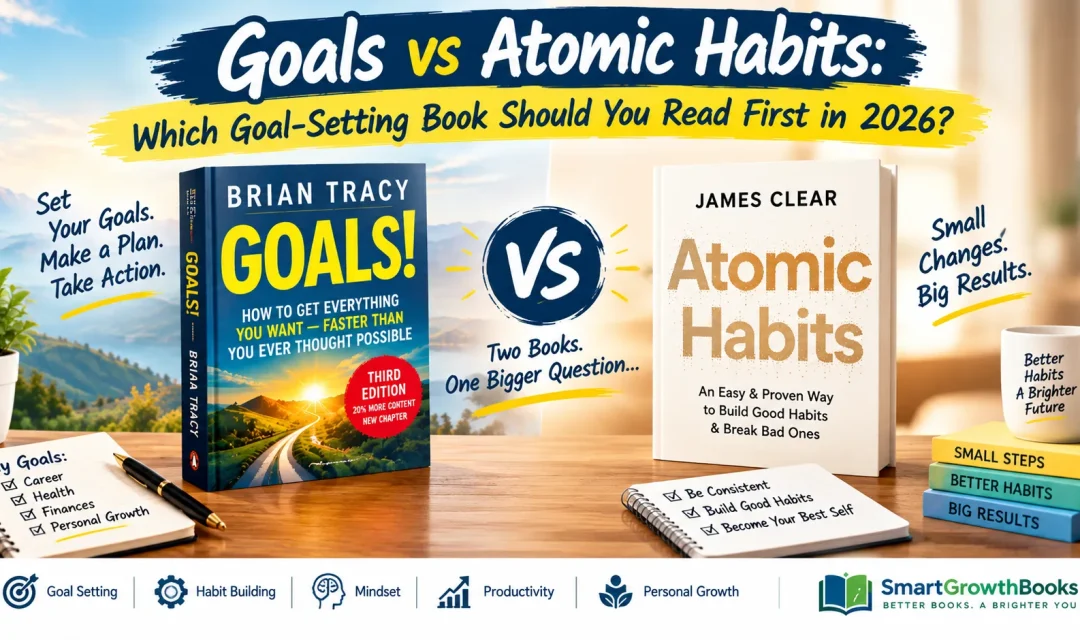
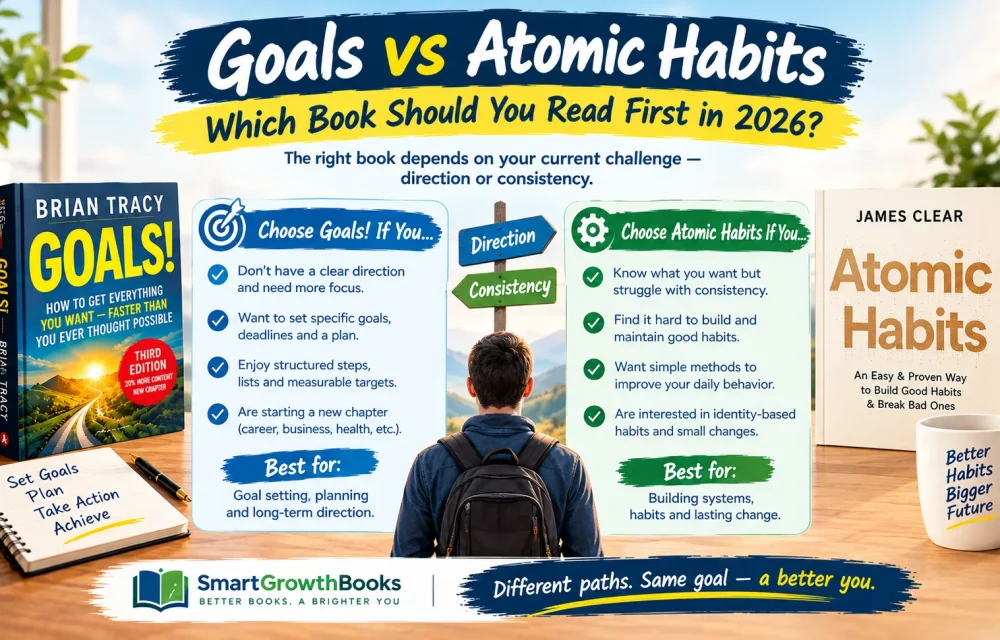
Goals vs Atomic Habits: Which Goal-Setting Book Should You Read First in 2026?
If you’re choosing between Brian Tracy’s Goals! and James Clear’s Atomic Habits, the real question is not which book is universally better. It is what problem you are trying to solve: direction or consistency.
Goals! starts with a clear outcome and asks you to define, write down, plan, and pursue it. Atomic Habits starts with the behaviors and systems that make progress repeatable. The two books overlap, but they emphasize different parts of the same larger process.
What Is Goals! by Brian Tracy About?
Brian Tracy’s Goals! presents goal setting as a structured process. The current Third Edition was published in December 2024 and includes 20% more content and a new chapter. The publisher describes it as a step-by-step guide to setting and achieving goals.
The book emphasizes clarity, written goals, deadlines, obstacles, required knowledge and skills, planning, visualization, and persistence. Tracy’s official material also presents a seven-step goal process built around deciding what you want, writing it down, setting a deadline, identifying what must be done, organizing a plan, taking action, and doing something every day.
In simple terms, Goals! asks:
What do you want, why do you want it, and what plan will take you there?
If you want to explore Tracy’s framework in more detail, read our Goals by Brian Tracy summary.
What Is Atomic Habits by James Clear About?
Atomic Habits approaches change from the opposite direction. Instead of beginning with a large outcome, James Clear focuses on the small behaviors, cues, rewards, environment, and identity changes that shape everyday progress.
Its Four Laws of Behavior Change are:
- Make it obvious.
- Make it attractive.
- Make it easy.
- Make it satisfying.
For a deeper look at Clear’s Four Laws of Behavior Change, read our Atomic Habits summary.
Clear also emphasizes identity-based habits: rather than focusing only on what you want to achieve, think about the type of person you want to become and use repeated actions to reinforce that identity.
The basic question becomes:
What system can I build so that the right actions happen consistently?
Goals vs Atomic Habits: The Core Difference
The simplest way to understand atomic habits vs goals is:
Goals! = direction and planning.
Atomic Habits = systems and behavior.
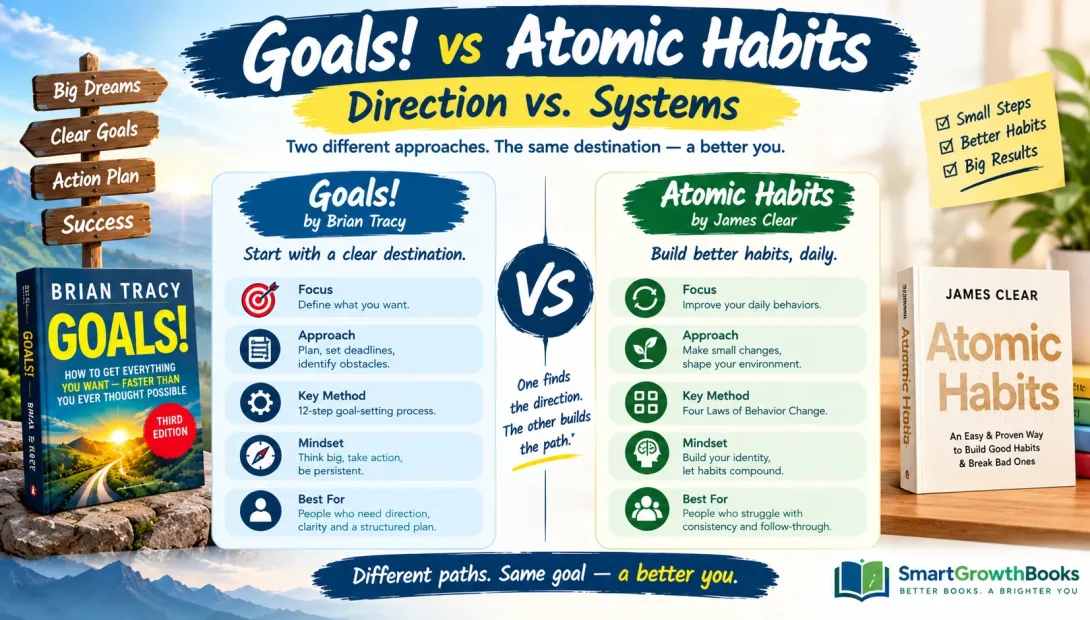
Tracy begins with the destination and works backward toward the plan. Clear focuses on the repeated process that makes progress possible. They are not necessarily opposing ideas. A goal can tell you where you want to go, while habits can help determine what you do every day.
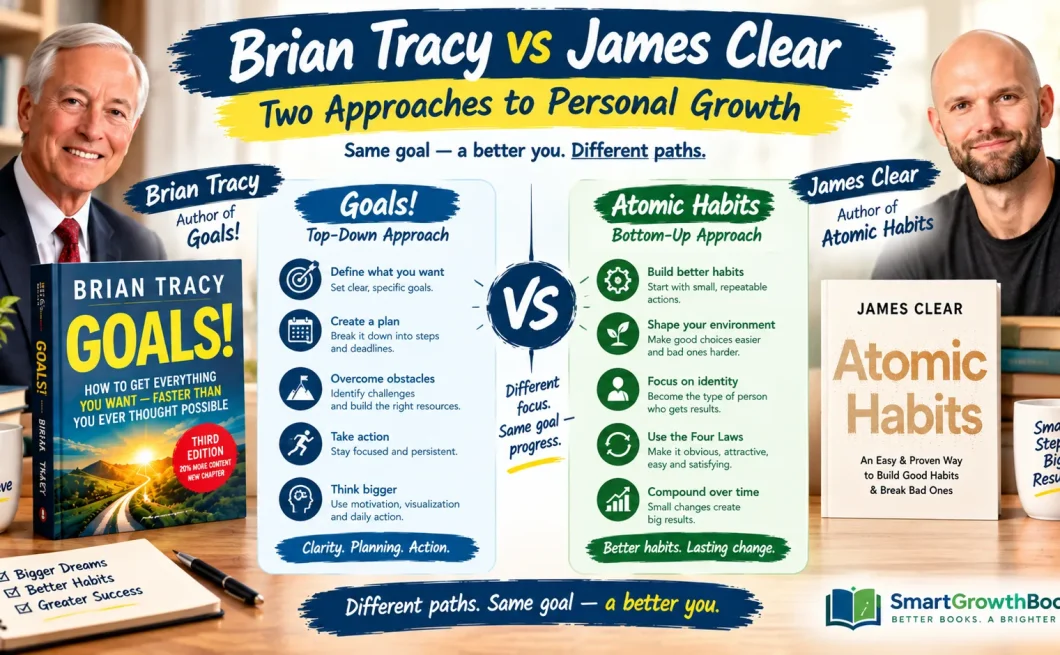
Brian Tracy vs James Clear: Five Key Differences
1. Outcome vs. System
Goals! puts the desired outcome at the center. You define what you want and create a plan around it.
Atomic Habits puts the process at the center. Clear argues that systems and repeated behaviors strongly influence the results you eventually get.
2. Long-Term Direction vs. Daily Behavior
Tracy encourages readers to think clearly about major goals and deadlines.
Clear brings attention back to today’s behavior: the cue, routine, environment, and reward surrounding an action.
3. Planning vs. Environment Design
Goals! spends considerable attention on writing goals, identifying obstacles, learning what you need, finding people who can help, and creating a detailed plan.
Atomic Habits focuses more heavily on making good behaviors easier and bad behaviors harder through environment and habit design.
4. Persistence vs. Iteration
Tracy places strong emphasis on persistence and continuing to work toward a goal.
Clear gives readers tools for examining why a habit is failing and changing the system around it.
5. Motivational Style vs. Behavioral Framework
Goals! has the direct, motivational style associated with traditional success literature.
Atomic Habits presents behavior change through a modern framework built around habit loops, identity, environment, and small improvements.
Neither style automatically makes one book more useful for every reader.
Goals (Brian Tracy) vs Atomic Habits: Frameworks Side-by-Side
Aspect | Goals! | Atomic Habits |
Core focus | Defining and pursuing outcomes | Building consistent systems |
Starting point | A specific goal | A behavior or habit |
Main framework | Goal-setting process | Four Laws of Behavior Change |
Time emphasis | Long-term direction and deadlines | Daily and repeated behavior |
Main question | What do I want to achieve? | What system will help me act consistently? |
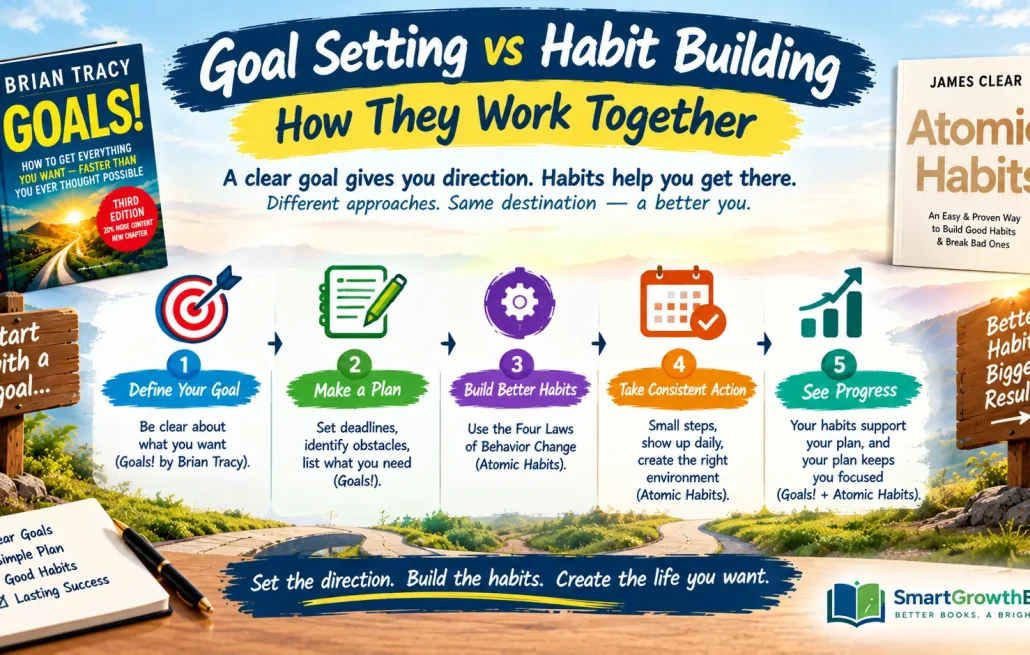
The frameworks can also be combined: define an important outcome, then build habits that support it.
Who Should Read Goals! First?
Goals! may be a useful starting point if:
- Your goals are vague and you need more clarity.
- You are beginning a career, business, financial, or personal transition.
- You enjoy written plans, deadlines, lists, and measurable targets.
- You have never completed a structured goal-setting exercise.
It may be less useful as a first read if you already know exactly what you want but repeatedly struggle to follow through.
Who Should Read Atomic Habits First?
Atomic Habits may be a useful starting point if:
- You know what you want but struggle with consistency.
- You repeatedly start and abandon routines.
- You want practical methods for changing your environment and behavior.
- You are interested in identity-based habits and small improvements.
It may be less useful as a first step if your bigger problem is that you do not yet know what you want to achieve.
Can You Read Both Books Together?
Yes. Their different emphases make them easy to combine. You could use Goals! to define an important outcome, deadline, and plan. Then use Atomic Habits to translate that plan into small behaviors you can repeat.
For example, the goal might be to write a book within a year. The goal-setting process can define the deadline, milestones, and required work. The habit framework can then help turn writing into a regular daily or weekly behavior.
This approach avoids treating goals vs atomic habits as a simple either-or decision.
Which Book Should You Read First in 2026?
Use this simple test:
If you cannot clearly describe what you want to achieve, start with the goal-setting problem.
If you know what you want but repeatedly fail to act consistently, start with the habit-building problem.
The choice therefore depends on your current gap rather than a universal ranking between the two books. And if both gaps exist, you do not have to choose permanently. You can define a direction first and then build systems that support it.
Final Takeaway
The most useful lesson from goals vs atomic habits may be that direction and behavior serve different purposes.
Goals! can help you clarify the destination, identify obstacles, set deadlines, and create a plan.
Atomic Habits can help you turn desired behavior into repeatable systems through cues, environment, ease, satisfaction, and identity.
You may not need to choose one philosophy against the other. A clear goal without supporting behavior can remain an intention, while effective habits without meaningful direction can lead to progress that is not connected to what you actually want.
Read the ideas critically, take what fits your situation, and most importantly, put the useful parts into practice.
Ready to Turn Better Ideas Into Better Actions?
You don’t need to completely change your life after reading two books. Start with one important goal. Then choose one small habit that moves you toward it.
If you enjoy practical ideas from books about personal growth, productivity, mindset, and success, explore more thoughtful summaries and comparisons on SmartGrowthBooks.
Don’t just read better ideas. Put the useful ones to work.
About the Author
Muhammad Ajmal
Founder & Book Summary Writer at SmartGrowthBooks
Muhammad Ajmal researches and writes practical book summaries focused on self-help, productivity, psychology, personal finance, motivation, and personal growth.
This Summary is published on September 2026.
Related Book Summaries
Stay Smarter Every Week
Get practical book summaries, productivity tips, and self-improvement insights delivered to your inbox.